Cremation is becoming an increasingly chosen option in South Africa, particularly in urban areas such as Gauteng. For many families, it offers simplicity, flexibility and affordability ~ while still allowing for a meaningful and deeply personal farewell.
If you are considering cremation, here is what you need to know.
What Is Cremation?
Cremation is the process in which the deceased is placed in a coffin or casket and respectfully reduced to ashes in a cremator. The ashes are then processed and returned to the family in a container or urn.
Unlike burial, cremation does not require a cemetery plot. The final resting place of the ashes is flexible and can reflect the wishes, personality and values of the person who has died.
A Modern Alternative: Aquamation
In addition to flame cremation, a newer process known as aquamation (also called water cremation) is now available in limited locations in South Africa, including facilities in Maitland and Pretoria.
Aquamation uses a combination of water, gentle heat and alkalinity to accelerate the body’s natural organic breakdown process. Unlike traditional flame cremation, it does not involve fire. The process is designed to mimic what would occur naturally over time in the earth, but in a carefully controlled and respectful setting.
Advocates of aquamation note that it uses significantly less energy than flame cremation and does not produce the same airborne emissions. Families typically receive more ash remains than with flame cremation, and the memorial process ~ including the return of ashes in an urn ~ remains unchanged.
At present, aquamation is not as widely available as traditional cremation, and families would need to confirm accessibility in their area. However, for those concerned about environmental impact, it may offer a meaningful alternative worth considering.
Types of Cremation in South Africa
When arranging a cremation, there are three main options to consider.
-
Direct (Straight) Cremation
Direct cremation is the simplest and most affordable option available in South Africa.
In this case:
- The deceased is transported directly to the crematorium.
- No funeral service is held beforehand.
- A simple, legally compliant coffin is used.
- The cremation takes place shortly after death.
- The ashes are returned to the family.
Many families then choose to hold a separate memorial service at a later date, in a setting that feels more personal and less pressured.
This option suits families who value privacy, simplicity or cost-effectiveness ~ or who prefer to create their own personalised ceremony later.
-
Funeral Service Before Cremation
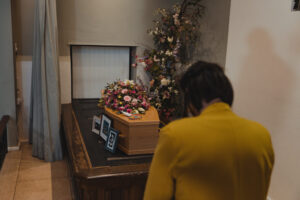
Some families prefer to hold a full funeral service before the cremation. This can take place at a chapel at the crematorium, a hall, a private venue, or even outdoors.
After the service, the coffin is taken to the crematorium.
This allows for a traditional structure while still choosing cremation as the final method of disposition.
-
Memorial Service After Cremation
A memorial service may be held after the cremation has taken place, with or without the ashes present.
This option offers flexibility with timing and venue, which can be especially helpful when family members are travelling or when a more customised celebration of life is desired.
A Crematorium Service
A smaller service may be held at the crematorium itself, either in addition to or instead of a larger ceremony. This is often attended only by close family and friends.
Some families choose to witness the committal of the coffin into the cremator. This is entirely optional and guided by personal preference.
Legal and Medical Requirements for Cremation
Cremation in South Africa is strictly regulated to ensure dignity, legality and safety.
Establishing the Cause of Death
Before cremation can proceed, the cause of death must be clearly established.
A medical referee appointed by the crematorium authority must confirm that:
- The deceased has been positively identified;
- The cause of death has been established beyond doubt;
- Cremation does not conflict with the written wishes of the deceased.
In certain circumstances, a post-mortem or private autopsy may be required.
Removal of Medical Devices
If the deceased had a pacemaker or similar implanted device, it must be removed before cremation. These devices can explode at high temperatures and pose a risk to staff and equipment.
Jewellery is also typically removed beforehand.
Special Considerations for Mine Workers
If the deceased worked in the mining industry, the family may be entitled to compensation for occupational lung disease. This may require consent for the removal and examination of the lungs, along with the completion of documentation for the Medical Bureau for Occupational Diseases.
The Cremation Process
The deceased is cremated in the chosen coffin or casket. Only one coffin is placed in the cremator at a time. The cremation itself usually takes between one and a half and three hours.
Afterwards:
- The remains are left to cool;
- Metal fragments are removed;
- The ashes are gently processed;
- The ashes are placed in a container or urn for the family;
Families are notified when the ashes are ready for collection.
What can be done with ashes?
One of the main advantages of cremation is flexibility.
Ashes may be:
- Kept at home in an urn.
- Buried in a cemetery.
- Placed in a columbarium niche.
- Scattered in a garden of remembrance.
- Scattered in a meaningful location (where permitted).
- Used in a memorial tree planting or eco-option.
Some families also install a memorial plaque to create a permanent place of remembrance.
There is no single right decision. The choice should reflect the person’s life, values and the needs of those left behind.
Wordways Ceremonies offers further information about ash scattering ceremonies.

Documents Required for Cremation in South Africa
Before cremation can take place, the following documents are required:
Declaration of Death
Issued by medical personnel or ambulance services.
Notice of Death (Form DHA 1663)
Issued by the attending doctor for natural deaths, or by a state pathologist in other cases.
This documentation is submitted to the Department of Home Affairs, which then issues the official death certificate.
Without the correct paperwork and authorisation, cremation cannot proceed.
Choosing Cremation: A Personal Decision
Cremation is often chosen because it is:
- More affordable than burial;
- Logistically simpler;
- Flexible in timing and memorial options;
- Suitable for non-religious or personalised ceremonies.
However, it is never simply a financial decision. It is about honouring the wishes of the person who has died and creating space for those who remain to say goodbye in a way that feels authentic.
A Gentle Word of Support
If you are reading this while facing a recent loss, you may feel overwhelmed by practical decisions.
You do not need to navigate them alone.
As a non-religious funeral celebrant based in Gauteng, I work with families who choose cremation and want a ceremony that reflects the real person ~ their story, their character, their relationships and their values.
Whether you are planning a memorial after a direct cremation or a full farewell before cremation, I can help you create something thoughtful, respectful and genuinely personal.
If you would like to talk through your options, you are welcome to contact me. Even a short conversation can bring clarity at a difficult time.

Frequently Asked Questions About Cremation in South Africa
How long after death does cremation take place?
Cremation usually takes place within a few days of death, once all legal documentation has been completed and authorisation has been granted by the medical referee. The exact timing depends on administrative processes and the availability of the crematorium.
How long does the cremation process take?
The cremation itself typically takes between one and a half and three hours. Afterward, the ashes are left to cool before being processed and placed into an urn or container for the family.
Can we have a non-religious service in the chapel at the crematorium?
Yes. Most crematorium chapels in South Africa allow families to hold religious or non-religious services. A chapel service can be fully personalised and does not have to include any religious content unless you choose to do so.
Many families opt for a secular or humanist ceremony that focuses on the person’s life, values and relationships rather than religious doctrine. You may also include music, readings, personal tributes and symbolic elements that reflect the individual being honoured.
It is always advisable to confirm specific policies with the crematorium, but in practice, non-religious services are widely accommodated. There is a limit on the time on a slot at the chapel.
Do we have to use an expensive coffin for cremation?
No. The law requires a coffin for cremation, but it does not need to be elaborate. For direct cremation, a simple, environmentally compliant coffin is typically used. Families may choose a more decorative coffin if they are holding a service beforehand, but this is entirely a personal decision.
What happens to metal or jewellery during cremation?
Jewellery is usually removed before cremation. During the cremation process, any metal fragments (such as surgical implants) are separated from the ashes afterwards. Crematoria have procedures in place to manage this respectfully.
What can we legally do with the ashes?
Ashes may be kept in an urn, buried in a cemetery, placed in a columbarium niche, or scattered in a meaningful location (subject to local regulations and permission where required). Many crematoria also offer gardens of remembrance and memorial plaque options.

Is cremation more affordable than burial?
In most cases, yes. Cremation avoids the cost of a burial plot, grave preparation and headstone installation. Direct cremation is generally the most cost-effective option, though overall costs vary depending on the type of ceremony chosen.
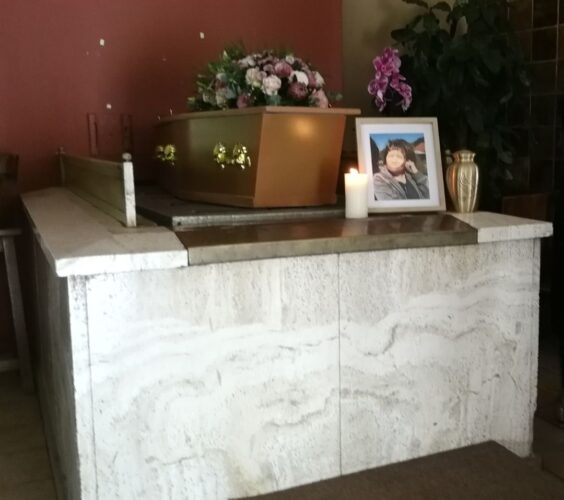
Featured image was taken at the Rebecca Street Crematorium Chapel, Pretoria.