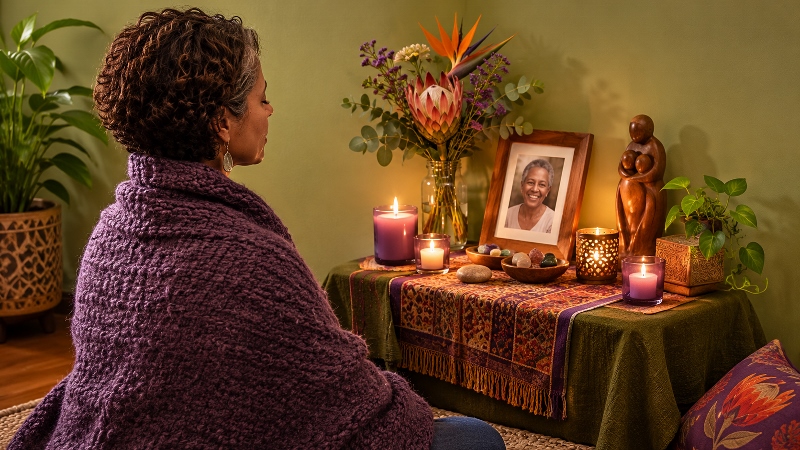
It is possible to honour your loss by creating a personal ritual of remembrance.
When someone we love dies, there is usually a ceremony: a funeral, a memorial, a celebration of life. These are shared occasions. They have a beginning and an end, people gather, words are spoken, and a celebrant like me helps hold the shape of the day.
But grief doesn’t end when the ceremony does. Often it’s afterwards, when the flowers have faded and the house is quiet, that we most need a way to stay connected to the person we’ve lost.
This is where ritual comes in. Megan Sheldon describes ritual as an intentional, symbolic action taken with the hope of creating meaning. I find that definition freeing. A ritual doesn’t need a venue, a guest list or a celebrant. It can be small, private and entirely yours. It only needs two things: intention and symbolism.
Ceremony and ritual: what’s the difference?
A ceremony is usually larger and shared, and often marks a big threshold: a death, a wedding, the arrival of a baby. A ritual is smaller and more personal. Anyone can create one, at any time, for any reason. Where a ceremony says “we are gathered here,” a ritual says “this is for me, and for them.”
Rituals for one person, or for many
You may want to honour one special person: a parent, a partner, a child, a friend. But you might also want to use a ritual of remembrance to commemorate a group. Perhaps it’s the grandparents you never met, the friends you’ve lost over the years, or everyone your family has said goodbye to. A pregnancy loss, or a loss that nobody else acknowledged, can also deserve a ritual of its own.
Some ideas to spark your own
- A walk they would have loved. Choose a path, a park or a hill. Walk it slowly, and stop at one spot to say something aloud or silently.
- Their recipe. Cook a favourite dish on their birthday or the anniversary of their death. Set a place for them if that feels right.
- A remembrance jar or box. Write memories on small pieces of paper and add one each year. On a special day, read a few.
- A planting. A tree, a herb, an aloe or a pot of something that flowers each spring. You tend it as you’d tend the memory.
- A letter. Write to them about what has happened since they left. Keep it, read it aloud, or burn it safely outdoors.
- A candle for many. Light one candle and say each name in turn. Some people use a single candle for the whole family’s dead, lit once a year.
- Their music. Play their songs at a set time, with nothing else to do but listen.
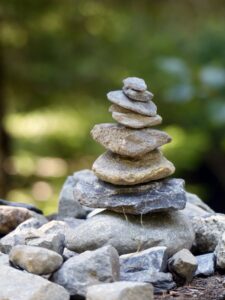
- A stone or shell. Collect one when you’re thinking of them, and slowly build a small cairn or garden.

How to create your own ritual of remembrance
- Decide who it’s for. One person, or a group?
- Choose a time. A birthday, an anniversary, the first day of spring, a Sunday morning, or simply when you feel the need.
- Choose a symbol. An object, a place, a food, a sound or a scent that connects you to them.
- Choose an action. Something you can do with your hands or your body: light, pour, plant, write, walk, place.
- Say or write something. Even a single sentence. “I remember you.” “Thank you for…” “I still miss…”
- Close it gently. A deep breath, a blown-out candle, or a moment of quiet to signal that it’s finished.
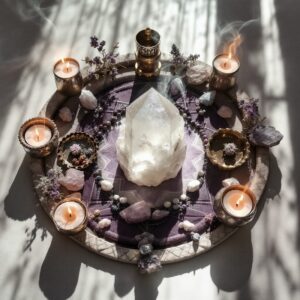
There is no right or wrong way, and no need to explain it to anyone. It can change over the years as you do. Some rituals are done once. Others become part of the way a family marks the year.
If you would like help creating a ritual, or if you’re planning a ceremony and want to build in something that people can carry home with them, I’m always happy to talk.