When someone we love dies, we naturally want to honour their life story in a meaningful way. An obituary serves an important practical purpose: announcing a death, sharing key biographical details, and providing funeral arrangements. However, it is necessarily constrained by space and formality.
A life story told during a celebration of life ceremony, on the other hand, is something altogether different. It’s an opportunity to paint a vivid, three-dimensional portrait of the person who has died: to capture their quirks and humour, their passions and contradictions, the small moments that defined them as much as their major achievements.
A celebrant does not simply recount a life. a celebrant truly celebrates that life. A life story should make attendees nod, smile, and recognize the person they knew and loved.
The Three Pillars of a Rich Narrative
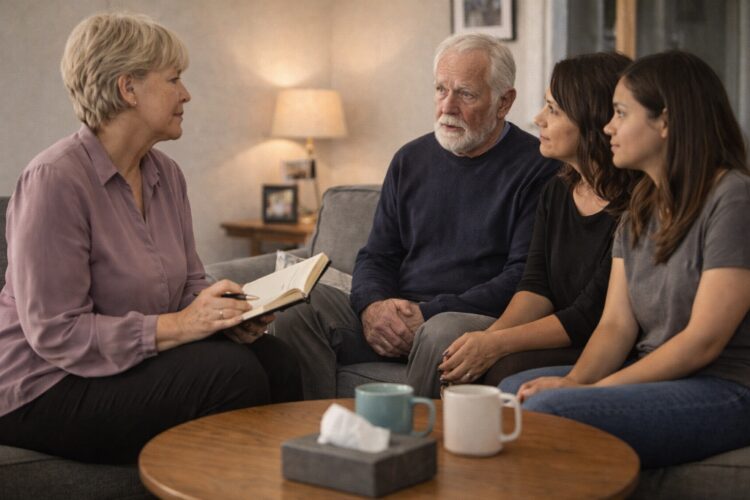
When the celebrant interviews the bereaved family, she is asking for three kinds of information:
- The Facts:
We need to acknowledge the milestone dates, the jobs, their achievements, and names of family members. - The Quirks:
But we also recall, with affection, the unique habits, eccentricities, passions, favourite sayings, and minor vices that made them them (e.g., their terrible singing, their obsession with a specific sports team, their signature bad joke). - The Impact:
Just as important, is how they made people feel. Were they dependable? Hilarious? The quiet observer? The family anchor? This is the emotional resonance.
We use the power of the anecdote. The officiant draws from the family specific, small stories, not broad statements. It is the stories that awaken the memories and the smiles.

Techniques for Weaving the Life Story
The celebrant uses all the qualities of a good storyteller: the variations of the voice, the use of timing, the rhythms of the story, the eye contact and the input of different voices.
- The Use of Voice and Tone:
The officiant captures the personality of the deceased through the tone of the delivery. Was the person formal, witty, or deeply sentimental? The language of the service will mirror their voice. - Creating “Character Arcs”:
Even in a short life story, you can trace how the deceased developed as a person. - The Role of Multiple Voices:
If possible, we draw on memories from various family members and friends. The final narrative is a tapestry woven from different perspectives, making it much richer than a single person’s view.
Why This Effort Matters to the Grieving
- Final Validation:
For the family, hearing their loved one’s story told accurately and lovingly is the greatest final gift. It truly honours the life that has come to an end. It confirms that this life mattered. - Comfort Through Recognition:
When attendees hear a specific, funny story, it allows them to genuinely connect with the memory, providing moments of shared comfort and healing laughter.
Creating the Legacy Document
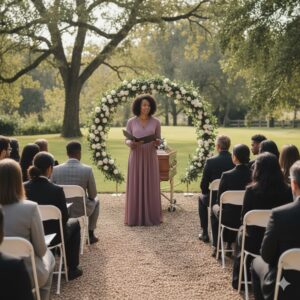
A non-religious celebrant will prepare a copy of the ceremony to give to the bereaved family after the ceremony has been conducted. The full, bespoke ceremony script that we create becomes a lasting document for the family.
Often the celebration of life ceremony passes in a blur for the bereaved. By giving them a copy of the ceremony, they have something that they can return to when they are calmer, and life is quieter. This script will bring them comfort during their time of grieving. They will find that this keepsake is something far more meaningful than a standard burial program.
Conclusion
A eulogy is a speech given at a funeral or memorial service that pays tribute to the person who has died. A skilled funeral celebrant does so much more than that.
If you are facing the task of celebrating a life, don’t settle for facts and dates. Allow Vanessa Bower, at Wordways Ceremonies, to help you uncover the rich, beautiful story that truly defines your loved one. Contact me today to start the compassionate conversation about preserving their unique legacy.
Frequently asked questions about how a non-religious funeral celebrant creates a meaningful celebration of life:
-
How do you capture someone’s unique personality when you have never met them?
As a celebrant, I spend considerable time with the family and friends of the person who has died, listening carefully to their stories, memories, and reflections. Through these conversations, I gather the details that made their loved one truly themselves ~ their sense of humour, their passions, their quirks, their values, and the relationships that mattered most to them. I might also look at photographs, to see the deceased in different contexts. This process allows me to craft a ceremony that feels authentic and personal, even though I never had the privilege of meeting the deceased myself.
-
What can you include in a non-religious ceremony to make it feel personal and meaningful?
The beauty of a non-religious ceremony is its complete flexibility. We can include anything that reflects the person’s life and values: their favourite music or poetry, readings from literature they loved, personal tributes from family and friends, symbolic gestures like lighting candles or releasing butterflies, photographs or videos, and even elements that reflect their hobbies or passions. The ceremony can be held anywhere meaningful—a favourite garden, by the sea, in a woodland, or a traditional venue. Without prescribed religious structures, we have the freedom to create something entirely bespoke.
-
Can a non-religious ceremony still provide comfort and a sense of occasion for grieving families?
Absolutely. A non-religious ceremony can be every bit as profound, dignified, and comforting as a religious service. The power comes from acknowledging the reality of loss whilst celebrating a life genuinely lived. By focusing on the person’s actual life story, their relationships, and their legacy, the ceremony provides a meaningful framework for grief and remembrance. Many families find great comfort in a ceremony that feels true to their loved one’s beliefs and personality, rather than following a script that might not reflect how they lived.