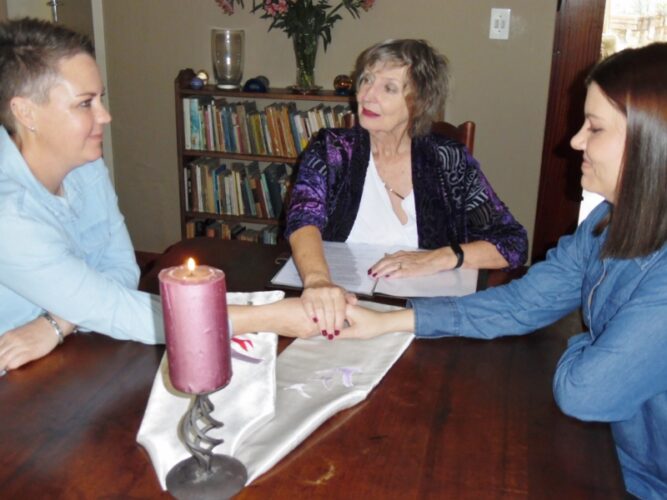
Same-sex marriages in South Africa are honoured and joyfully celebrated, particularly in the Pride Month of October.
Love takes many forms, and every love story deserves the opportunity to be celebrated. This Pride Month, we’re celebrating the freedom to love openly, make a commitment and create a wedding ceremony that reflects who you are.
South Africa’s first Pride march took place in Johannesburg in October 1990. It was organised by GLOW (Gay and Lesbian Organisation of the Witwatersrand). Prominent activists such as Simon Nkoli and Edwin Cameron addressed the crowd of about 800 protestors. The event was both a queer celebration and an anti-apartheid protest.

Pride is about celebrating visibility, identity, dignity and the ongoing struggle for equality.
Marriage equality in South Africa: What does the law say?
With the advent of democracy in South Africa and our inclusive Constitution, we now have laws in place that are intended to protect us from all forms of discrimination and to confirm our equality.
Once the Constitution was adopted in South Africa in 1996, the state was challenged on the fact that same-sex couples did not have the same rights as opposite-sex couples in terms of marriage. The Civil Union Act (2006) legalised same-sex marriages.
South Africa is one of just under 40 countries globally to recognise LGBTQ+ weddings. No other country in Africa allows legal gay or lesbian marriages.

What is a civil union, and how does it work?
According to the Act, a civil union is the willing union of two persons who are both 18 years of age or older, and who can prove that they are single, divorced or widowed. A Marriage Officer (MO) solemnises the civil union.
The Marriage Officer must have been put forward by a Home Affairs designated organisation. The MO must have passed an examination on the Civil Union Act in order to become designated as an MO.
A same-sex couple can choose to register their union as a marriage or as a civil partnership. The marriage/civil partnership under this Act carries the same legal status as a marriage conducted under the Marriages Act.
Most couples choose the term “marriage”.
In South Africa a common-law marriage is not recognised, so the civil partnership option is a way to recognise the relationships between couples who do not wish to marry, but legally want to be recognised as each other’s next of kin. There are a few other circumstances under which a couple may choose to have a “civil partnership”.
The legal process in the wedding involves prescribed documentation.
The same-sex officiant submits all the documentation to a branch of Home Affairs. The marriage/civil partnership is registered there. The status of the individuals is then changed on the Population Roll to “married”.
A civil union provides legal recognition and carries legal rights and responsibilities.
Some gay or lesbian couples want a simple legal ceremony. Others want a larger, personalised wedding with friends and family.
What does this mean for couples planning a same-sex marriage?
A same-sex wedding celebrant firmly believes that:
- Every couple deserves to have their relationship respected.
- Every couple should be able to celebrate their commitment in a way that feels authentic to them.
- A wedding ceremony should reflect the couple, not somebody else’s assumptions about what a marriage should look like.
Concerns that same-sex couples might have:
- Will our Marriage Officer welcome us without judgement?
- Can we have a ceremony that reflects our personalities and relationship?
- Must we follow traditional wedding customs?
- Can we have a small, private ceremony rather than a big wedding?
- Can we include our own readings, promises, music and meaningful rituals?
No couple should not have to compromise their identities or pretend to be someone they are not in order to celebrate their commitment.
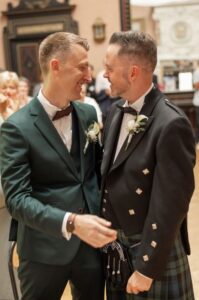
All loves welcome at Wordways Ceremonies
Vanessa Bower is a member of the South African Secular Society. She is a designated as a Marriage Officer under the Civil Union Act through SASS. It gives her great pleasure to conduct same-sex marriages.
Couples can choose from a variety of wedding options.
The minimal option is a simple legal signing. There will be no guests, only the two witnesses required by law. The same-sex Marriage Officer will solemnise the marriage according the legal requirements. She will complete the required Home Affairs documentation and Civil Union Register, and submit all the paperwork to her local Home Affairs branch.
Other couples prefer a short ceremony with up to twenty guests. The MO coveres the legal requirements as well.
The third option is a full ceremony, with readings, rituals such as handfasting, vows and exchange of rings. The legal requirements complete the ceremony.
Your wedding, your way
The Marriage Officer for same-sex couples should shape the ceremony around the couple.
Vanessa’s ceremonies are tailor-made for each couple. They are non-religious and tell the story of this couple’s love.
Couples may wish to include traditions that reflect their cultural backgrounds or create new rituals that feel meaningful to them. LGBTQ+ couples can decide what matters to them in their inclusive wedding ceremony.
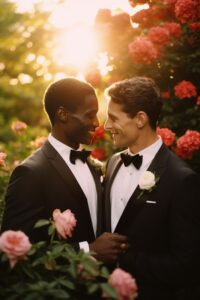
A Pride Month invitation
If you and your partner are thinking about getting married, you deserve a ceremony in which you feel welcome, respected and celebrated.
At Wordways Ceremonies, all loves are welcome. Whether you are planning a small legal ceremony or a more personalised celebration, I’d be happy to talk to you about making your wedding your own.
Contact Wordways Ceremonies to discuss your same-sex wedding or civil union.