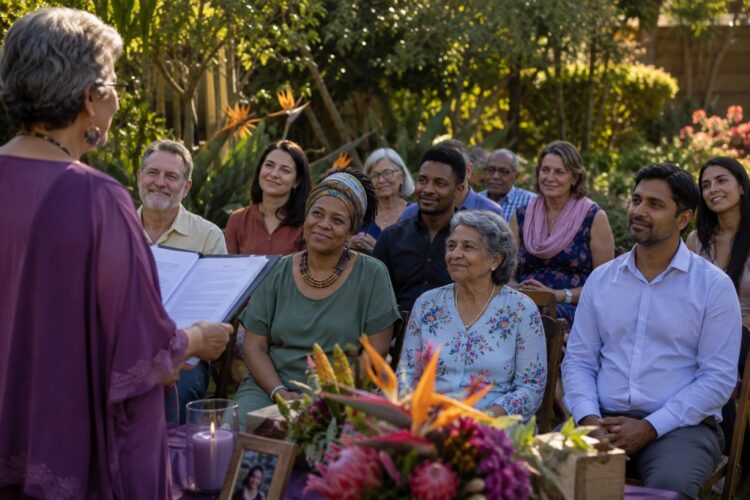
Recently Vanessa from Wordways Ceremonies held a workshop called How to Plan Your Non-religious Funeral, and one of the liveliest discussions centred on a surprisingly common question: Why should we have a funeral ceremony at all?
Several people felt that, instead of a formal farewell, they would rather their family simply have a party or a braai, share some drinks, tell stories and remember the good times. It is an understandable view. Many people associate funerals with rigid traditions, sombre rituals or religious services that do not reflect who they are.
And I agree that a meaningful farewell does not have to be gloomy, formal or religious.
But after many conversations with bereaved families, I have come to believe that some form of intentional ceremony is deeply valuable ~ not for the person who has died, but for the people who remain.
A party and a ceremony are not the same thing
Gathering with friends and family after a death can be wonderful. Laughter, shared memories and favourite music are often an important part of healing. In fact, many non-religious funerals include exactly those elements.
The difference is that a party is primarily social, while a ceremony is purposeful.
A ceremony creates a dedicated moment in which everyone present acknowledges a profound truth: a life has ended, and that matters.
Without that shared acknowledgement, people can sometimes leave feeling as though something important was missing. The food was enjoyed, the stories were funny, but there was no clear moment of saying, “We are here because this person lived, was loved, and is now gone.”

Ceremonies help us face reality
One of the hardest parts of grief is that death often feels unreal at first. We may know intellectually that someone has died, yet emotionally we still expect a phone call, a message or the sound of their footsteps.
A funeral ceremony helps bridge that gap between knowledge and acceptance.
When we gather, hear the person’s name spoken, listen to their story, see their photographs, and share silence together, we begin to absorb the reality of the loss. Psychologists sometimes speak about the importance of acknowledging the death as an early task of mourning. Ceremony provides a structure for doing exactly that.
This is especially important in modern life, where people are often expected to “be strong” and return to normal quickly. A funeral gives mourners permission to stop, grieve and recognise that their world has changed.
A ceremony honours the whole person
Another misconception is that funerals are only about sadness. In my experience, the most memorable ceremonies are often full of warmth, humour and personality.
A well-crafted non-religious funeral can include:
- favourite music,
- stories from friends and family,
- readings or poems,
- photographs and meaningful objects,
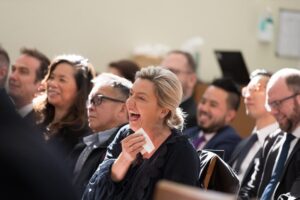
- moments of laughter,
- and honest reflections on both the joys and challenges of a person’s life.
This is very different from a generic service. It becomes a portrait in words and memories.
When people hear the story of a life told thoughtfully, they are reminded not only that someone has died, but that someone unique was here. Their quirks, passions, achievements, relationships and even their imperfections become part of a shared human story.
It supports those left behind
Perhaps the strongest argument for having a funeral ceremony is that it helps the living support one another.
Grief can be extraordinarily isolating. Family members often discover that each person is mourning differently: one cries openly, another becomes practical, another withdraws into silence.
A ceremony brings these different griefs into the same space.
It allows people to:
- witness one another’s sorrow,
- offer comfort through their presence,
- reconnect with extended family and friends,
- and realise that they are not carrying the loss alone.
Even a simple ceremony ~ held at a small club, in a garden, at a crematorium, or in a small gathering place ~ can create a powerful sense of community and connection.
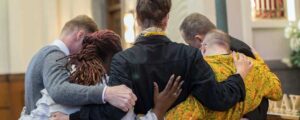
Years later, people may remember very little about the refreshments that were served, but they often remember who stood beside them, what was said, and how they felt held by others in that moment.
A ceremony brings a measure of closure. People will often say “I feel better after that.”
Ceremony creates a lasting memory
One of the unexpected gifts of a funeral is that it becomes a reference point in the family story.
After the initial shock has faded, people frequently return to the ceremony in their minds:
- “I loved the story about his first motorcycle.”
- “Remember how everyone laughed when her gardening hat was placed beside the flowers?”
- “That was the moment I realised how many people she had helped.”
These memories can bring comfort long after the day itself has passed. They become part of the continuing relationship we carry with the person who has died.
The real question
So, should you have a funeral ceremony or a celebration of life?
My answer is: you do not have to choose between them.
A meaningful non-religious funeral can be both a celebration and a ceremony. It can include good food, storytelling, music and even laughter, while still providing the structure, acknowledgement and shared reflection that grieving people need.
The real question is not “Do I want a funeral?” but “What will help the people I love remember, honour and cope with my death?”
A thoughtful ceremony is one of the greatest gifts we can leave behind. It says to those who remain:
“This life mattered. Your grief matters. And we will face this loss together.”
At Wordways Ceremonies, I believe that every farewell should reflect the person who has died and support the people who must continue living. Whether simple or elaborate, solemn or light-hearted, a well-designed non-religious funeral ceremony can provide something a party alone often cannot: a meaningful moment of goodbye, shared with those who need it most.